


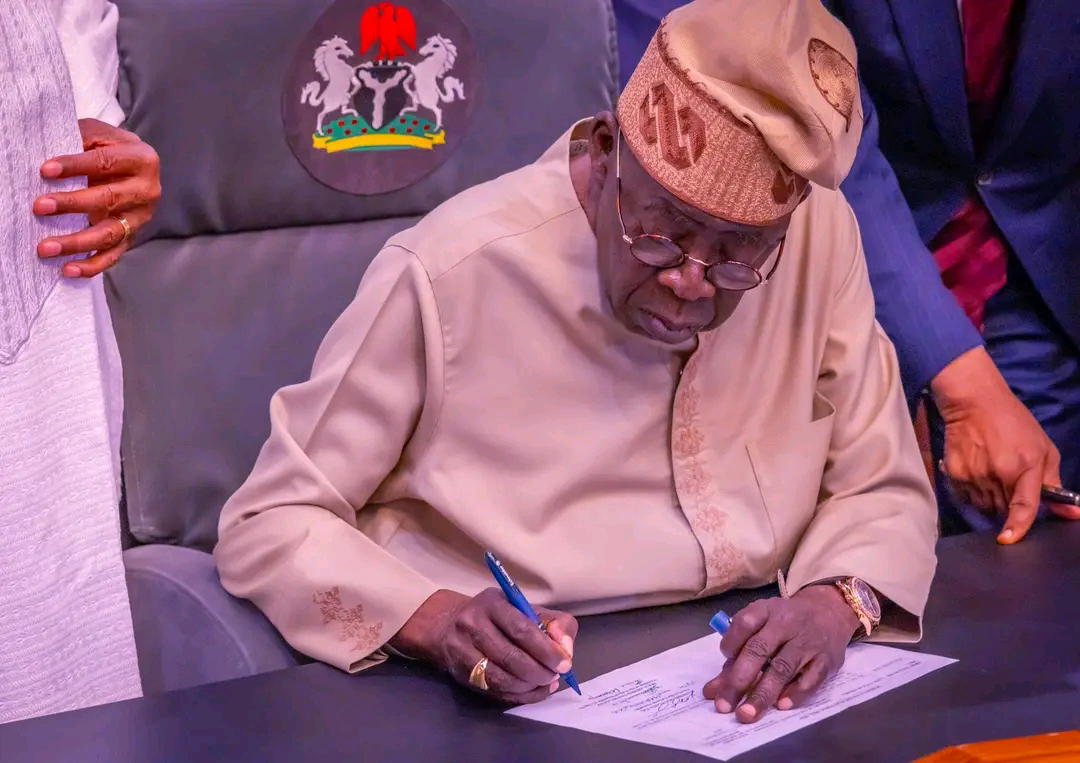
President Bola Ahmed Tinubu has officially signed the 2026 Appropriation Bill into law, approving a total federal expenditure of ₦68.32 trillion for the fiscal year. In a related move, the president also signed legislation extending the implementation period of the capital component of the 2025 budget from March 31, 2026, to June 30, 2026.
The twin decisions mark a significant step in Nigeria’s fiscal planning, as the administration seeks to sustain economic reforms, complete ongoing infrastructure projects, and align spending with its Renewed Hope Agenda.
Breakdown of the ₦68.32 Trillion 2026 Budget
The newly approved 2026 budget outlines spending across key areas of government operations, debt obligations, and capital development.
According to the approved framework:
₦4.799 trillion is allocated for statutory transfers
₦15.8 trillion is set aside for debt servicing
₦15.4 trillion goes to recurrent expenditure
₦32.2 trillion is dedicated to the Development Fund for capital expenditure
The allocation to capital spending accounts for nearly half of the total budget, signaling a continued emphasis on infrastructure expansion, economic productivity, and long-term national development.
This capital-heavy structure is expected to support road construction, rail modernization, power projects, healthcare upgrades, education infrastructure, agriculture, and industrial growth.
Focus on Growth and Stability
The Tinubu administration says the 2026 budget is designed to maintain macroeconomic stability while stimulating growth across strategic sectors.
Government officials describe the spending plan as a balanced approach that addresses:
- Statutory obligations
- Rising debt service commitments
- Government operational costs
Critical investments in infrastructure and development
The administration believes this mix is necessary to improve living standards, expand economic opportunities, and create jobs.
At a time when Nigerians continue to face inflationary pressure, currency volatility, and cost-of-living challenges, the budget will be closely watched for its real-world impact.
Why the 2025 Budget Was Extended
In addition to signing the 2026 Appropriation Act, President Tinubu also assented to the Appropriation (Repeal and Enactment) (Amendment) Bill, 2026.
The amendment extends the implementation period of the capital component of the 2025 budget by three months from March 31 to June 30, 2026.
This means ministries, departments, and agencies (MDAs) now have more time to complete ongoing projects already funded under the previous budget cycle.
The federal government says the extension is necessary to ensure full utilisation of appropriated funds, especially for projects already at advanced stages of execution.
Examples may include:
- Road and bridge constructionPower and energy projects
- Health facility upgrades
- Water and sanitation works
- Education infrastructure
- Security
installationsWithout an extension, many partially completed projects could face delays, contract disputes, or funding disruptions.
Benefits of the Extension
The government argues that the deadline shift will help MDAs:
- Consolidate ongoing workImprove project completion rates
- Prevent waste of already released funds
- Deliver better value for public spending
- Avoid abandoning strategic infrastructure
Budget implementation delays have long been a challenge in Nigeria, often caused by late approvals, procurement bottlenecks, revenue shortfalls, and administrative inefficiencies.
By extending the timeline, the administration appears to be trying to preserve continuity while transitioning into the 2026 spending cycle.
Full Implementation Begins April 1
With the 2026 budget taking effect from April 1, the federal government says implementation will begin immediately.
President Tinubu has directed all ministries and agencies to ensure disciplined, transparent, and efficient use of public funds.
He reportedly stressed:
- Value for money
- Timely project delivery
- Accountability
- Responsible spending
- Improved service delivery
This directive comes amid growing public demand for stronger oversight of government expenditure and measurable results from federal budgets.
Tinubu Praises National Assembly
The president also commended the leadership and members of the National Assembly for what he described as their diligence, patriotism, and cooperation in reviewing and passing the budget.
Budget relations between the executive and legislature are often politically sensitive, particularly when amendments, delays, or spending disputes arise.
Tinubu emphasized that continued collaboration between both arms of government remains essential to achieving Nigeria’s development goals.
Bigger Economic Picture
The 2026 budget arrives at a critical moment for Africa’s largest economy.
Nigeria continues to face multiple economic pressures, including:
High inflation
- Rising food prices
- Unemployment and underemployment
- Public debt servicing burdens
- Infrastructure deficits
- Weak household purchasing power
At the same time, the administration is pushing reforms aimed at increasing revenue, improving tax collection, attracting investment, and stabilizing public finances.Tinubu has said his government remains committed to:
- Deepening fiscal reforms
- Enhancing revenue generation
- Supporting job creation
- Strengthening social protection programmes
- Driving inclusive growth
Final Thoughts
President Tinubu’s signing of the ₦68.32 trillion 2026 budget into law sets the fiscal direction for the year ahead, with strong emphasis on capital investment, reform, and economic growth.
The extension of the 2025 capital budget also reflects a pragmatic effort to complete unfinished projects and maximize previous allocations.
As implementation begins, the real test will be whether the ambitious spending plan translates into visible improvements in infrastructure, jobs, social welfare, and economic stability for millions of Nigerians.