


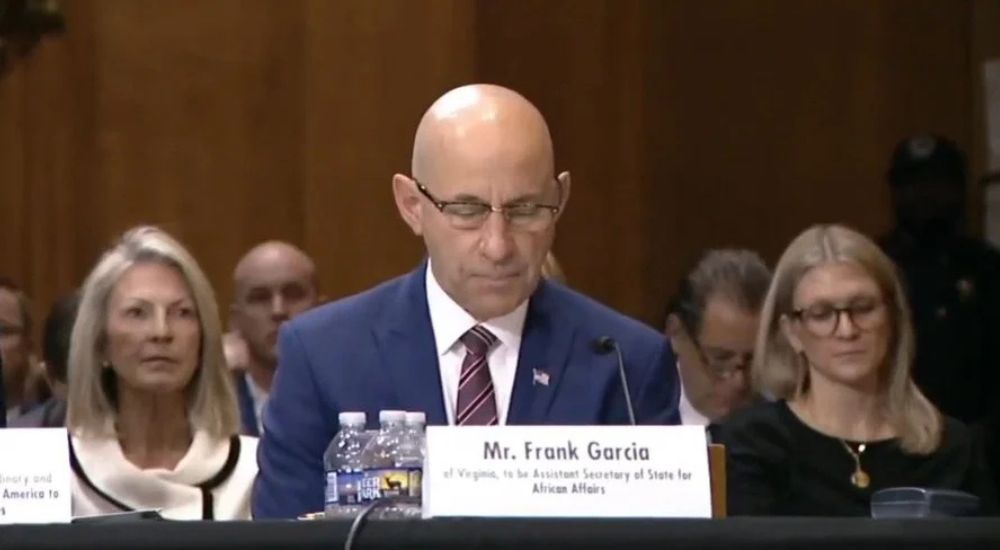
The United States Senate has confirmed Frank Garcia as Assistant Secretary of State for African Affairs, filling a key diplomatic vacancy that had remained open for more than a year.
The position is the most senior role in the U.S. State Department responsible for shaping and managing American foreign policy and diplomatic relations with all 54 African countries.
Garcia, a 28-year veteran of the U.S. Navy and former adviser to the House Intelligence Committee, was confirmed on Monday as part of a broader Senate vote on multiple administration nominees.
His confirmation ends months of interim leadership within the Africa bureau, which had been overseen by acting officials during the prolonged vacancy.
Although he has extensive national security and intelligence experience, Garcia is not widely known within established Africa policy circles and has limited publicly documented engagement focused specifically on African affairs.
He was nominated on the recommendation of Secretary of State Marco Rubio, reflecting a shift toward officials with security and strategic backgrounds in key diplomatic posts.
At his confirmation hearing, Garcia signalled a change in U.S. approach to Africa, saying future engagement would prioritise trade, investment and strategic partnerships rather than long-term aid dependency.
He also stated that U.S. policy under his leadership would focus strongly on national interests, aligning with the “America First” foreign policy direction.
His appointment comes at a time when more than 30 U.S. ambassadorial posts across Africa remain unfilled, raising concerns among lawmakers about reduced American diplomatic presence on the continent.
Analysts say the staffing gaps have created space for increased influence by China and Russia, particularly in regions experiencing conflict and political instability, including Sudan and parts of the Sahel.
Lawmakers have warned that limited U.S. diplomatic engagement could weaken Washington’s influence in Africa at a time of rising global competition for strategic partnerships and resources.
The new appointment is expected to play a central role in reshaping U.S.-Africa relations in the coming years as geopolitical tensions on the continent continue to evolve.


