


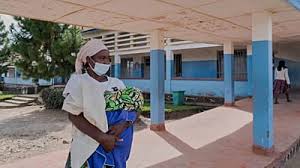
The World Health Organization has declared a global health emergency following a deadly Ebola outbreak in the eastern Democratic Republic of Congo, where at least 88 people have died and hundreds more are suspected to have been infected.
Health authorities say the outbreak, linked to the rare Bundibugyo strain of the Ebola virus, is spreading rapidly across several communities and has now reached the strategic city of Goma, raising fears of a wider regional crisis.
Professor Jean‑Jacques Muyembe, head of the National Institute of Biomedical Research in DR Congo, confirmed that the outbreak began in the Mongbwalu health zone before spreading to Bunia, Rwampara and eventually Goma a densely populated commercial hub near the border with Rwanda.
According to officials, one of the latest confirmed cases in Goma involved a woman infected by her husband, who had earlier died in Bunia. Medical experts warn that the movement of infected persons between towns is accelerating transmission and making contact tracing increasingly difficult.
The outbreak is unfolding in one of the most volatile parts of eastern Congo, where armed groups remain active and insecurity continues to disrupt humanitarian operations. Experts fear the violence and displacement in the region could severely undermine efforts to isolate patients, monitor contacts and deliver medical supplies.
Professor Muyembe warned that the epidemic could spread “very rapidly” because many affected communities are difficult to access, while ongoing conflict has weakened local healthcare systems.
The World Health Organization says the situation now qualifies as a Public Health Emergency of International Concern, its second-highest emergency classification. WHO Director-General Tedros Adhanom Ghebreyesus said although the outbreak has not yet reached the level of a pandemic, there are serious concerns that the actual number of infections may be far higher than current official figures suggest.
The Africa Centres for Disease Control and Prevention reports that there are already more than 336 suspected cases across affected regions. International medical charity Médecins Sans Frontières, also known as Doctors Without Borders, has begun deploying emergency response teams and medical equipment to support overwhelmed local health authorities.
One of the biggest concerns for health experts is that the Bundibugyo strain currently has no approved vaccine or targeted treatment. Unlike the more common Zaire strain of Ebola, which has licensed vaccines, the Bundibugyo variant remains difficult to contain through immunisation campaigns.
Congolese Health Minister Samuel‑Roger Kamba said investigations traced the outbreak to a nurse in Bunia who first showed symptoms in late April. Authorities in neighbouring Uganda have also confirmed one death linked to the same strain, increasing fears of cross-border transmission.
Local civil society organisations describe an alarming humanitarian situation in affected communities. In Bunia, residents say hospitals are overcrowded, isolation centres are inadequate, and many patients are dying in their homes without medical attention. Families are reportedly handling bodies themselves a major risk factor for further infections because Ebola spreads through direct contact with bodily fluids.
The crisis is being compounded by poor road networks, insecurity and limited laboratory testing capacity, which experts say means many infections are likely going undetected.
The WHO has warned that the combination of a high positivity rate, confirmed infections in two countries, and growing reports of unexplained illnesses strongly suggests the outbreak could be much larger than currently reported.
This marks the 17th recorded Ebola outbreak in the Democratic Republic of Congo, a country that has repeatedly battled deadly epidemics over the past decades. Between 2018 and 2020, another Ebola outbreak in eastern Congo killed nearly 2,300 people, becoming one of the deadliest in history.
Ebola is a highly infectious viral disease that spreads through contact with infected bodily fluids. Symptoms include fever, weakness, vomiting, diarrhoea and severe bleeding. The virus can incubate for up to 21 days before symptoms appear.
As international agencies intensify surveillance and emergency response operations, health officials warn that the next few weeks will determine whether the outbreak can be contained before it escalates into a wider regional catastrophe.