


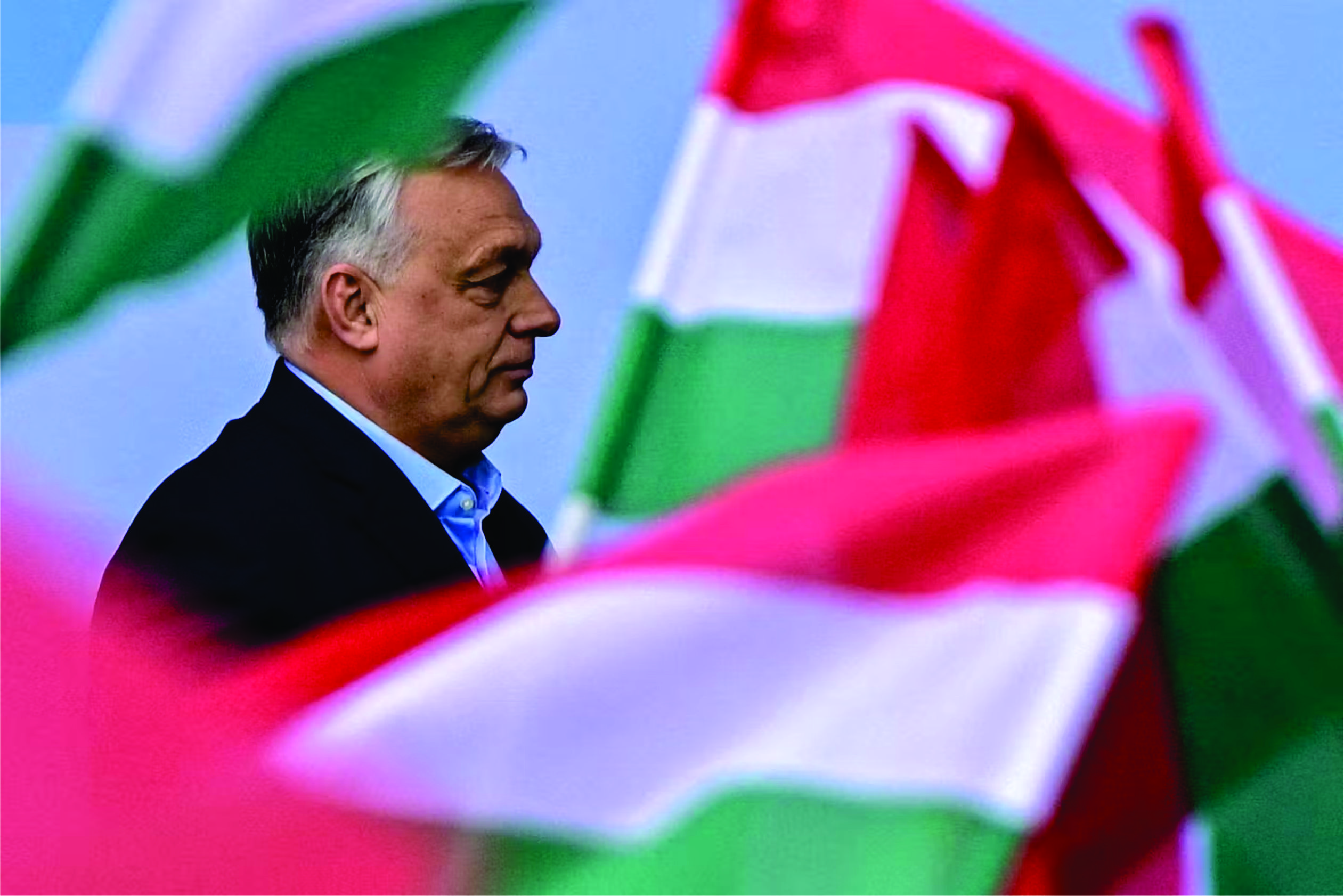
A major political crisis is unfolding in Hungary just days before national elections, as allegations of election-related espionage and suspected foreign intelligence links have triggered a widening scandal in Budapest’s political and security establishment.
The controversy erupted after Hungarian security services began investigating reports of an alleged covert network operating in and around government-linked institutions in Budapest, with claims that sensitive political data and strategic campaign information may have been accessed or influenced in the run-up to the vote. Officials have not publicly confirmed all details, but senior sources within Hungary’s domestic intelligence agency, the Constitution Protection Office (AH), acknowledge that an active investigation is underway.
The scandal has rapidly escalated into a political firestorm involving senior figures close to Prime Minister Viktor Orbán, with opposition parties accusing elements within the ruling Fidesz party of failing to prevent foreign interference in the electoral process. Opposition leader Péter Márki-Zay has called for an emergency parliamentary inquiry, arguing that “Hungary’s democratic integrity is under direct threat if intelligence concerns are being politicized or ignored.”
At the center of the controversy are allegations—denied by the government—that individuals linked to Russian intelligence services may have attempted to influence political communications and internal campaign strategies. While no formal evidence has been publicly released, Hungarian media outlets and investigative journalists in Budapest report that cybersecurity breaches and suspicious data transfers have been flagged in recent weeks, prompting heightened concern among European security partners.
Prime Minister Viktor Orbán, speaking in Budapest, has dismissed claims of systemic espionage involvement as “politically motivated interference narratives” designed to undermine his government ahead of the election. However, he confirmed that intelligence services are reviewing “all potential security breaches,” adding that Hungary will not tolerate external manipulation of its democratic process.
The situation has drawn attention in Brussels, where European Union officials are closely monitoring developments. EU Commission representatives have emphasized the importance of safeguarding electoral integrity across member states, particularly amid rising concerns about hybrid threats, disinformation campaigns, and cyber intrusions targeting democratic institutions.
Diplomatic observers note that Hungary’s close political and economic ties with Moscow have long been a point of contention within the European Union and NATO. The latest allegations have intensified scrutiny of Budapest’s foreign policy orientation, especially as other regional crises—including tensions in the Middle East and heightened NATO maritime security concerns—continue to strain European unity.
In Budapest, security has been visibly tightened around government buildings and electoral commission offices, while Hungarian police and counterintelligence units increase monitoring of digital infrastructure and communications networks. Cybersecurity experts working with European agencies have reportedly been brought in to assess the scope of potential breaches and identify possible vulnerabilities in election systems.
The Russian government has strongly denied any involvement, with officials in Moscow describing the allegations as “fabricated” and part of a broader Western narrative aimed at damaging bilateral relations. Kremlin spokesperson Dmitry Peskov stated that Russia “does not interfere in the internal political processes of other countries,” rejecting any connection to the Hungarian investigation.
Despite these denials, the political impact inside Hungary is already significant. Markets have shown mild volatility, and political analysts warn that the scandal could influence voter sentiment in the final days before the election, particularly among undecided voters concerned about national sovereignty, corruption, and institutional trust.
As Hungary moves closer to election day, the unfolding espionage allegations have added a new layer of uncertainty to an already tense political environment. Whether the investigation leads to concrete evidence or remains a contested political issue, the scandal is expected to dominate public debate and potentially reshape the outcome of one of the country’s most closely watched elections in recent years.