


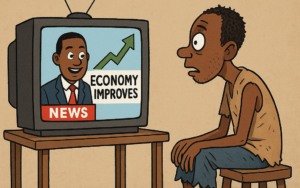
Nigeria’s economy continues to show signs of gradual expansion and resilience in the face of persistent inflationary pressures, according to recent economic indicators and market assessments. Despite ongoing challenges linked to rising consumer prices, foreign exchange volatility, and global economic uncertainty, key sectors of the economy are recording moderate growth, signaling cautious optimism for policymakers and investors.
Recent economic data suggests that Nigeria’s gross domestic product has maintained a positive growth trajectory, driven largely by improved performance in the oil and gas sector, expanding digital services, agriculture recovery efforts, and increased government capital spending. Analysts note that while inflation remains a significant concern for households and businesses, structural reforms and fiscal adjustments are beginning to stabilize certain macroeconomic indicators.
The inflationary pressure, which continues to affect food prices, transportation costs, and household essentials, remains one of the most pressing economic issues. Food inflation, in particular, has been heavily influenced by supply chain disruptions, insecurity in key agricultural regions, and rising logistics costs. As a result, many Nigerian households continue to experience reduced purchasing power, even as nominal economic output shows improvement.
The Nigeria government, through coordinated efforts with the Central Bank of Nigeria, has implemented a series of monetary and fiscal policies aimed at controlling inflation while supporting economic growth. These measures include tightening monetary policy to curb excess liquidity, adjusting interest rates to manage demand pressures, and introducing interventions designed to stabilize the foreign exchange market.
In the financial sector, the naira has shown periods of relative stability compared to previous volatility cycles, although pressure persists due to high import dependency and fluctuating global oil prices. The Central Bank’s ongoing reforms in the foreign exchange market are aimed at improving transparency, attracting foreign investment, and reducing speculative demand for foreign currency.
The oil sector remains a central pillar of Nigeria’s economic performance. Increased crude oil output, alongside gradual improvements in production efficiency, has contributed significantly to export earnings. However, challenges such as pipeline vandalism, oil theft, and global price fluctuations continue to limit the sector’s full potential. Despite these constraints, the sector’s contribution to national revenue has helped support government expenditure and foreign exchange inflows.
Beyond oil, non-oil sectors are increasingly becoming important drivers of growth. Agriculture has shown signs of recovery following earlier disruptions caused by insecurity and climate-related challenges. Government-backed initiatives aimed at boosting local food production and reducing import dependence are gradually yielding results, particularly in rice, maize, and cassava production chains.
The technology and digital services sector is also emerging as a key growth frontier. Nigeria’s expanding fintech ecosystem, digital entrepreneurship, and mobile banking adoption are contributing to job creation and improved financial inclusion. Startups and tech-driven companies are attracting both local and international investment, reinforcing the country’s position as one of Africa’s leading innovation hubs.
Manufacturing and small-scale industries are also experiencing mixed but improving performance. While high energy costs and foreign exchange constraints continue to affect production costs, local manufacturing initiatives and import substitution policies are encouraging increased domestic output. Many small and medium-sized enterprises are adapting by shifting to locally sourced raw materials and more efficient production methods.
Fiscal policy remains a critical component of the government’s economic strategy. Efforts to improve revenue generation through tax reforms, digital tax collection systems, and expanded non-oil revenue streams are underway. These measures aim to reduce dependence on borrowing and oil revenue while strengthening long-term fiscal sustainability.
Economists, however, caution that inflation remains a structural challenge that could undermine economic gains if not carefully managed. Rising prices continue to affect consumption patterns, particularly among low- and middle-income households. This has led to increased calls for targeted social interventions, food security programs, and infrastructure development to ease cost-of-living pressures.
International observers, including development partners and financial institutions such as the International Monetary Fund, have acknowledged Nigeria’s reform efforts while emphasizing the need for sustained policy consistency. They highlight that balancing inflation control with growth stimulation will remain a delicate task in the coming months.
Market analysts also point to investor sentiment as a key indicator of economic direction. While uncertainty remains in some sectors, improved regulatory clarity, gradual exchange rate reforms, and infrastructure investments are helping to restore cautious confidence among both domestic and foreign investors.
Looking ahead, economic projections suggest that Nigeria’s growth trajectory will depend heavily on its ability to maintain macroeconomic stability while addressing structural bottlenecks such as energy shortages, insecurity, and transportation inefficiencies. Continued investment in infrastructure, human capital development, and industrial diversification will be essential in sustaining long-term growth momentum.
In conclusion, Nigeria’s economy stands at a critical intersection of growth and inflationary pressure. While key indicators show resilience and gradual expansion, the impact of rising prices continues to challenge households and businesses across the country. The coordinated policy efforts of the government and the Central Bank aim to stabilize the economy and build a foundation for more inclusive and sustainable growth in the years ahead.

