


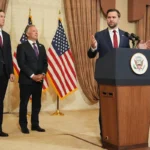
The United States has indicated that the ongoing conflict with Iran may be approaching a critical turning point, with senior officials expressing cautious optimism that the war could soon come to an end. The development follows weeks of intense fighting, mounting casualties, and sustained international pressure for a ceasefire, as diplomatic efforts gain renewed momentum across multiple fronts.
At the center of this optimism is Donald Trump, who stated in recent remarks that the war is “very close” to ending, signaling a potential breakthrough in negotiations. His comments come amid ongoing ceasefire talks facilitated by international mediators, including efforts led through diplomatic channels in Pakistan.
The conflict, which began in late February following coordinated strikes involving U.S. and allied forces, has evolved into one of the most consequential geopolitical crises of the year. It has drawn in regional actors, disrupted global energy markets, and heightened fears of a broader Middle East war. However, recent developments suggest a possible shift from confrontation to negotiation.
Fragile Ceasefire Offers Window for Peace
A temporary ceasefire currently in place has provided a narrow but critical opportunity for diplomacy. According to reports, both the United States and Iran have agreed “in principle” to extend the truce, allowing more time for negotiations to continue.
The ceasefire, though fragile, has significantly reduced active hostilities on the ground, offering relief to affected regions and opening the door for dialogue. Yet, key issues remain unresolved, including Iran’s nuclear program, control over strategic waterways such as the Strait of Hormuz, and broader regional security concerns.
António Guterres has emphasized that continued negotiations are “highly probable” and essential to achieving a lasting resolution. He noted that while progress has been made, the complexity of the conflict means that a final agreement will require sustained diplomatic engagement and compromise from all parties involved.
Diplomatic Momentum Builds
Behind the scenes, intense diplomatic activity is underway. Pakistan has emerged as a key mediator, hosting high-level discussions aimed at bridging differences between Washington and Tehran. These talks, while not yet producing a final agreement, have been described as constructive and necessary steps toward de-escalation.
The United States has maintained that diplomacy remains its preferred path forward, even as it continues to apply strategic pressure. Measures such as naval deployments and economic restrictions have been used to push Iran toward negotiations, while also ensuring that U.S. interests and allies in the region are protected.
Iran, for its part, has signaled a willingness to engage, though it continues to insist on conditions related to sovereignty, sanctions relief, and security guarantees. Analysts note that Tehran’s position reflects both internal political considerations and broader strategic objectives.
Military Pressure and Strategic Calculations
Despite the diplomatic progress, military tensions have not entirely subsided. The U.S. recently enforced a naval blockade targeting Iranian ports, aimed at limiting economic activity and increasing leverage in negotiations.
The blockade has had immediate implications for global trade and energy supply, particularly given the strategic importance of the Gulf region. It also underscores the dual-track approach being employed by Washington combining military pressure with diplomatic outreach.However, experts warn that such measures carry risks. Any miscalculation or escalation could quickly derail talks and reignite full-scale conflict. The presence of multiple actors in the region further complicates the situation, increasing the likelihood of unintended confrontations.
Human and Economic Impact
The war has already taken a significant toll. Thousands of lives have been lost, including both military personnel and civilians, while infrastructure damage has disrupted livelihoods across affected areas. The humanitarian situation remains a major concern, with aid organizations calling for increased access and support.
Beyond the immediate human cost, the conflict has had far-reaching economic consequences. The International Monetary Fund has warned that the war is slowing global economic growth, increasing inflation, and destabilizing energy markets.
Oil prices surged sharply during the height of the conflict, driven by fears of supply disruptions in one of the world’s most critical energy corridors. Although prices have begun to stabilize amid ceasefire talks, volatility remains a key risk.
The international community has largely welcomed signs of de-escalation, with world leaders urging both sides to commit fully to peace efforts. European and Asian powers have called for restraint, emphasizing the importance of stability in the Middle East for global security and economic health.
The stakes extend far beyond the region. A prolonged conflict could have triggered a global recession, disrupted trade routes, and intensified geopolitical rivalries. Conversely, a successful resolution could restore confidence in diplomatic solutions and reduce tensions in one of the world’s most volatile regions.
Uncertainty Remains
Despite the optimism, significant challenges remain. Previous rounds of talks have ended without agreement, highlighting deep divisions between the parties. Key sticking points particularly regarding nuclear development and regional influence continue to complicate negotiations.
Analysts caution that while the current trajectory is encouraging, the situation remains fluid. The ceasefire is temporary, and its extension will depend on tangible progress in negotiations. Any breakdown in talks could quickly reverse recent gains.
A Critical Moment for Peace
As the United States signals that the war may be nearing its end, the coming days are expected to be decisive. Diplomats, military leaders, and international organizations are working against the clock to secure a lasting agreement that addresses the root causes of the conflict.
For now, the message from Washington is one of cautious hope: that after weeks of violence and uncertainty, a pathway to peace may finally be within reach. But achieving that outcome will require not only political will but also sustained cooperation, trust-building, and a shared commitment to stability.
The world is watching closely. Whether this moment marks the beginning of the end of the conflict or merely another pause in a prolonged struggle will depend on the choices made at the negotiating table in the days ahead.