


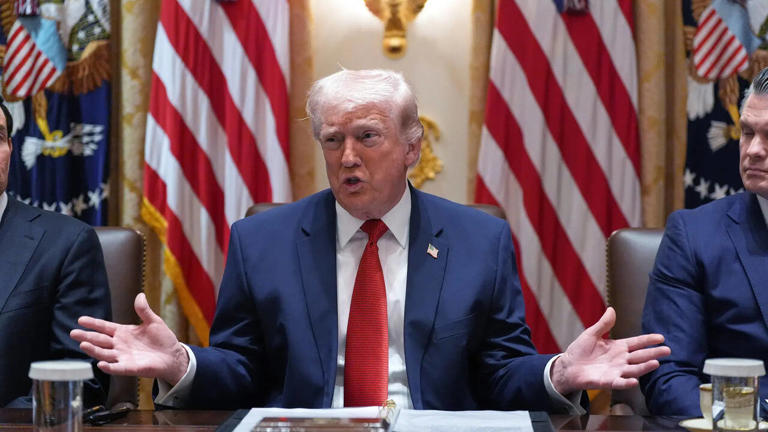
United States President Donald Trump has announced a delay in a planned military strike targeting the energy infrastructure of Iran, extending a previously set deadline to April 6, 2026, in what officials describe as a strategic pause to allow ongoing diplomatic negotiations to progress.
The decision, confirmed comes amid escalating tensions between Washington and Tehran following weeks of sustained hostilities involving the United States, Israel, and Iranian-backed forces across the Middle East. The proposed strikes were expected to focus on key Iranian oil production and export facilities, widely regarded as the backbone of the country’s economy and a critical component of global energy supply chains.
According to senior U.S. administration officials, the extension provides an additional ten-day window for backchannel negotiations that are reportedly being conducted through regional intermediaries. President Trump, speaking from Washington, stated that discussions were “progressing constructively,” and suggested that the decision to delay military action was influenced by signals from Iranian representatives indicating a willingness to engage, albeit cautiously, in dialogue aimed at de-escalation.
The planned strikes form part of a broader military posture adopted by the United States since late February 2026, when a coordinated campaign reportedly supported by Israel began targeting Iranian military installations, missile systems, and logistical networks. The conflict has since expanded beyond direct engagements, with Iranian-aligned groups launching retaliatory attacks against U.S. and allied positions in countries such as Iraq and Syria, while maritime security incidents have been reported in the strategically vital Strait of Hormuz.
The Strait of Hormuz, through which a significant portion of the world’s oil exports pass, has become a central flashpoint in the crisis. U.S. officials have accused Iran of disrupting shipping lanes and threatening international energy security, while Tehran has defended its actions as a response to what it describes as “provocative and unlawful aggression” by the United States and its allies. Control over this narrow waterway remains a critical factor shaping both military calculations and diplomatic urgency.
Within Iran, potential targets for the delayed strikes include major oil export terminals such as those located on Kharg Island, which handles the majority of the country’s crude oil shipments. Analysts note that any direct attack on such facilities would likely have immediate and far-reaching consequences for global oil markets, potentially triggering sharp price increases and supply disruptions affecting economies in Europe, Asia, and beyond.
Despite Washington’s assertion that negotiations are advancing, Iranian officials have publicly downplayed the extent of any formal talks. Statements from Tehran indicate skepticism toward U.S. intentions, with authorities rejecting proposals they characterize as disproportionately favorable to American and Israeli strategic interests. Iranian leadership has also reiterated its position that any meaningful agreement must include guarantees regarding sovereignty, sanctions relief, and regional security arrangements.
The human and economic toll of the conflict continues to mount. Since the escalation began in late February 2026, thousands of casualties have been reported across Iran, Israel, and neighboring regions, with critical infrastructure damaged and civilian populations increasingly affected by the violence. The broader Middle East remains on high alert, as governments brace for the possibility of further escalation should diplomatic efforts collapse.
Global markets have responded with volatility, particularly in the energy sector. Oil prices have experienced significant fluctuations, driven by fears of supply disruptions and uncertainty surrounding the stability of major production and transit hubs in the region. International stakeholders, including European and Asian powers, have called for restraint, urging both Washington and Tehran to prioritize diplomatic solutions over military confrontation.
While the extension of the deadline to April 6, 2026, offers a temporary reprieve, military analysts caution that the situation remains highly fragile. U.S. forces in the region are reported to remain on heightened alert, with naval and air assets positioned to execute strikes should negotiations fail. Similarly, Iranian defense systems have been reinforced around critical infrastructure sites, signaling preparedness for potential escalation.
The coming days are expected to be decisive in determining whether diplomacy can avert a broader conflict. With both sides maintaining firm public positions while quietly exploring negotiation channels, the delay ordered by President Trump represents a narrow but significant window for de-escalation in one of the most volatile geopolitical crises of 2026.


