


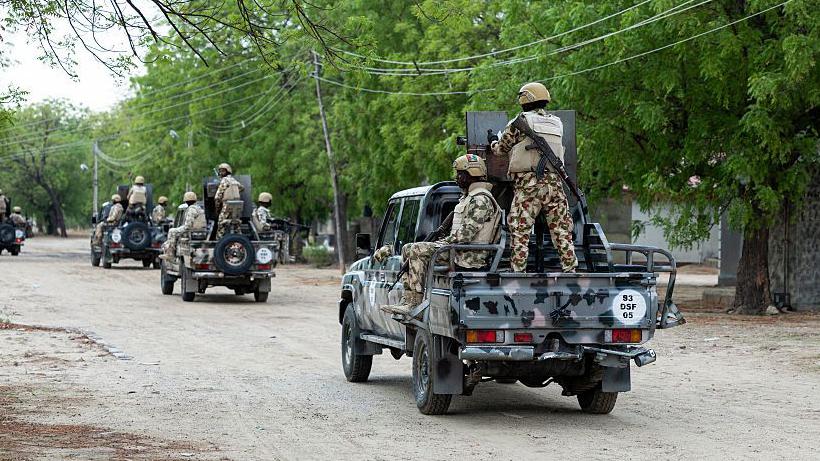
The governments of Nigeria and the United States have announced the killing of a senior Islamic State commander during a joint military operation in north-eastern Nigeria, describing the mission as a major breakthrough in the fight against terrorism in West Africa.
According to statements released by both countries, the operation targeted Abu-Bilal al-Minuki, a high-ranking Islamic State leader accused of coordinating extremist activities across several regions. United States President Donald Trump said the militant leader was killed in a “meticulously planned” joint operation carried out alongside Nigerian forces.
In a post on his Truth Social platform, Trump described al-Minuki as the second-in-command of ISIS globally and one of the world’s most active terrorists. The militant had been under U.S. sanctions since 2023 over alleged links to international terror financing and extremist operations.
Nigeria’s President Bola Ahmed Tinubu confirmed the development in a statement issued after the raid, praising the collaboration between Nigerian troops and the United States military.
Tinubu said the strike took place in the early hours of Saturday in the Lake Chad Basin region and resulted in the death of al-Minuki and several of his lieutenants. He described the operation as a strong example of international cooperation against terrorism and commended the professionalism of the Nigerian Armed Forces.
Military authorities said the mission was based on intelligence indicating that the extremist leader had established a heavily fortified hideout in a remote part of Borno State, the centre of Nigeria’s long-running insurgency.
The operation reportedly involved coordinated air and ground assaults conducted by Nigerian special forces with intelligence and surveillance support from the United States Africa Command, known as AFRICOM.
An army spokesperson said the strike successfully destroyed the militant enclave without any casualties among Nigerian or U.S. personnel. Officials believe the death of al-Minuki could significantly weaken Islamic State operations in West Africa and disrupt communication between regional extremist cells and ISIS leadership abroad.
Borno State has remained the epicentre of violent attacks by Boko Haram and the Islamic State West Africa Province, or ISWAP, for more than 17 years. The insurgency has killed thousands of people, displaced over two million residents and devastated communities across north-eastern Nigeria.
Security analysts say the latest operation reflects growing military cooperation between Nigeria and the United States following increased pressure from Washington for stronger counterterrorism measures in the region.
In recent months, the United States has expanded intelligence-sharing, surveillance operations and military training support for Nigerian forces. Following joint airstrikes in Sokoto State late last year targeting Islamic State fighters operating near the Niger border, Washington also deployed drones and additional military advisers to assist Nigerian operations.
President Tinubu thanked President Trump for what he described as unwavering support in combating terrorism and expressed hope for more coordinated operations against armed groups threatening national and regional security.
The Nigerian government says it remains committed to dismantling terrorist networks and restoring stability across affected communities in the North-East.