


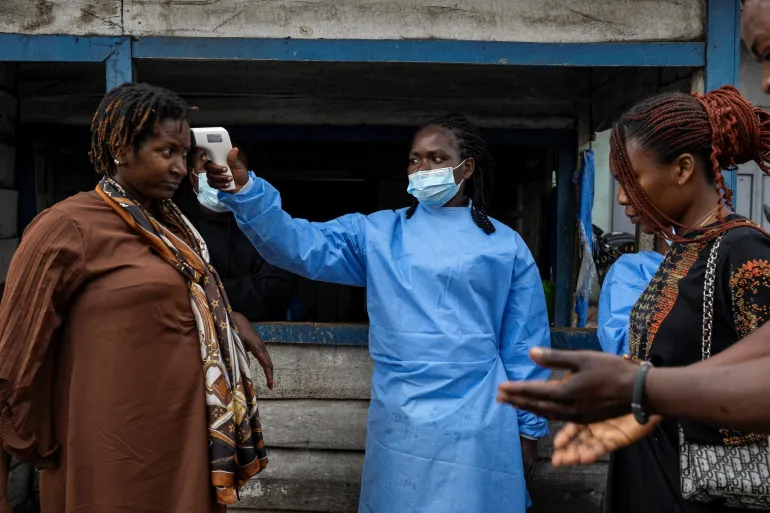
The World Health Organization (World Health Organization) has declared the latest outbreak of a rare Ebola strain in the Democratic Republic of Congo and Uganda a “public health emergency of international concern,” as health officials scramble to contain the fast-moving virus.
The outbreak involves the Bundibugyo strain of Ebola, a lesser-known but highly dangerous variant for which no licensed vaccine or specific treatment currently exists. Experts say the virus has already caused more than 130 deaths from over 500 suspected cases, with infections spreading across multiple provinces in eastern Congo and into neighbouring Uganda.
The epicentre is in Congo’s Ituri province, a busy cross-border region where mining activity and population movement have made containment more difficult. Health workers say the virus has now reached areas hundreds of kilometres from the initial outbreak zone, raising fears of wider regional spread.
Ugandan authorities confirm at least one death and several infections, while hundreds of contacts are being monitored and quarantined as a precaution.
The WHO says the situation is being worsened by insecurity, weak health systems, and delayed detection in remote areas. WHO Director-General Tedros Adhanom Ghebreyesus has expressed deep concern over the speed and scale of the outbreak.
Medical experts explain that the Bundibugyo strain is different from the Zaire strain responsible for the 2014–2016 West Africa epidemic, which killed more than 11,000 people.
While less studied, Bundibugyo Ebola can still have a fatality rate of 30 to 50 percent.
Virologists say the biggest challenge is that existing vaccines, including Merck’s Ervebo vaccine, were designed primarily for the Zaire strain, although early studies suggest partial protection may be possible against related strains.
There is currently no approved vaccine for Bundibugyo Ebola, but researchers say development is underway. Scientists are exploring adaptable vaccine platforms, including viral vector and mRNA technologies, which could speed up production during outbreaks.
Global health initiatives such as the Coalition for Epidemic Preparedness Innovations (CEPI) are funding research into broader “multivalent” Ebola vaccines designed to protect against multiple strains.
Health officials in Congo say emergency supplies, including protective equipment, have been delivered, while experimental vaccine shipments are also being prepared from international partners.
The outbreak has triggered regional and international concern, with several countries introducing travel restrictions, border screening, and quarantine measures for travellers from affected regions. Some borders have also been temporarily closed as a precaution.
Despite growing urgency, experts warn that vaccine development remains a lengthy process involving clinical trials, regulatory approval, and large-scale manufacturingsteps that are difficult to accelerate during an active outbreak in remote and unstable regions.
Public health specialists say the crisis highlights long-standing inequalities in global vaccine response, noting that outbreaks in Africa often receive less funding and attention until they pose wider international risks.
For now, health authorities continue contact tracing, isolation measures, and surveillance efforts in a bid to prevent the outbreak from escalating into a larger regional epidemic.


